Thursday, March 31, 2016

Change comes to Myanmar

Good things are happening in Myanmar, formerly known as Burma, as reported in the Wall Street Journal today.

http://www.wsj.com/articles/myanmars-new-president-pledges-to-change-constitution-1459323568

Nobel Peace Prize winner Aung San Suu Kyi is no longer under house arrest.

Her party won recent elections.

The new president of Myanmar, Htin Kyaw, was sworn in--the first civilian leader in more than fifty years.

He promised to amend the military-drafted constitution  to meet "democratic standards."

The amendments could allow Suu Kyi to become president.  She is currently barred because she had a British husband and her two sons are British.

Burma has had a rocky road since the rule by the British and then by Japan.

The assassination of Suu Kyi's father, Aung San, in 1947 was followed by civilian rule until a military coup in 1962.

See this timeline:
http://www.bbc.com/news/world-asia-pacific-12992883

May peaceful change continue.

Friday, March 11, 2016

Can 3 laws stop gun deaths?


Thank you to researchers from Boston University for studying 25 laws in various states and finding out which ones are actually associated with a drop in gun deaths.

It turns out that three laws are associated with a steep drop in gun deaths, possibly as great as 90%.

Melissa Healy reports on this research in today's Los Angeles Times.

http://www.latimes.com/science/sciencenow/la-sci-sn-gun-deaths-three-laws-20160310-story.html

No, it's not a ban on assault rifles nor a law requiring locking devices on all firearms.

According to Bindu Kalesan, a quantitative social researcher at BU, the useful measures are:

1) universal background checks for firearms sales (not just for handgun sales),

2) background checks on persons buying ammunition, and

3) "a requirement that gun owners get their firearms microchipped or 'fingerprinted' for identification purposes."

No wonder the National Rifle Association is so firmly against background checks.  

They would save lives.

Feminist Economics

Much of the inequality women experience boils down to economic inequality.

Here's an article in The Economist reporting that there is now a branch of economics called "feminist economics" to study this inequality and its causes as well as any progress in reducing the gender gap women face. 

http://www.economist.com/node/21694529?cid1=cust/ednew/n/bl/n/20160310n/owned/n/n/nwl/n/n/n/n

Here's a telling comment from Alfred Marshall, a 19th C. economist (from the article):

“If you compete with us, we shan’t marry you,” he once gallantly warned the fairer sex. In his book, Principles of Economics, he described the field as “the study of men as they live and move and think in the ordinary business of life”.  

There's even a journal called Feminist Economics.

http://www.feministeconomics.org/

Yay!  I wish Virginia Woolf were here to observe this progress.

In her 1937 book Three Guineas, she notes that one woman surveyed English laws and made the case that married women should be allowed to own their own property.  In 1871 this change in the law was approved.  

This woman was Barbara Leigh Smith Bodichon.  She and a friend, Emily Davies, noticed that in 1861, education was only nominally open to women, so in 1869 they founded a college for women that became Girton College in Cambridge.

These changes for women only happened because of economic resources these two women possessed.

http://www.britannica.com/biography/Barbara-Leigh-Smith-Bodichon

http://www.girton.cam.ac.uk/girtons-past

Thank you to John Arthur for forwarding to me the link to this article--from his Twitterfeed.

Thursday, March 10, 2016

Births, Marriage, & Inequality


Thank you to KPFK for the About Letters and Politics feature on the 2014 book 

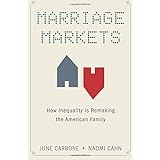
Marriage Markets: How Inequality Is Remaking the American Family by June Carbone and Naomi Cahn

on International Women's Day.

https://kpfa.org/program/letters-and-politics/

Here's the biggest statistic to emerge from the research by Carbone and Cahn:

Less than 10% of births to college-educated women are out of wedlock; for mothers without a college degree, more than 50% are.


In the KPFK interview, we learn that unequal access to contraception shapes women's lives from age 13 or so.

Young women in the top half of society economically are typically given contraceptives at an early age for problems including acne and menstrual cramping.  The have protection when they become sexually active.  They are less likely to give birth until they have completed their educational goals.  

Young women in the lower half of US economic order do not access contraception until after the birth of their first child.  As single mothers with low education, their opportunities are curtailed.

See this review:

http://concurringopinions.com/archives/2014/05/book-review-carbone-and-cahns-marriage-markets-how-inequality-is-remaking-the-american-family.html


A review of the book in the Wall Street Journal takes different tack on the reasons for the discrepancy.

http://www.wsj.com/articles/book-review-marriage-markets-by-june-carbone-and-naomi-cahn-1403295461


Wednesday, March 9, 2016

Shunning of Japanese in the 1950s

Nowadays children learn in school about the rounding up of 120,000 Japanese Americans during World War II and the confining of them into ten detention camps throughout the Western states.  


Those of us who grew up in the 1950s know that this injustice was very rarely mentioned, if at all, in our schools.

Our Japanese friends did not talk about this, nor did their parents.  

In fact, many Japanese Americans were shunned when they returned to their communities.

Here is the story my friend Diane tells:

The Japanese internment did not actually end at the end of WWII.We lived at the end of a dead end street in southern California.  Across the street from us was a Japanese family that had been in an internment camp.  
The man was a gardener by trade and his front lawn was gorgeous and very well tended.  It was a compendium of plants and flowers and bushes.They totally kept to themselves...   So to me their internment continued.  The women on our block had a "club".  That's what it was called!  Mom would go to the club meeting once a month.  Each woman in the club hosted a meeting when her turn came around.  I wonder if the Japanese woman was invited.   It seems like it was another internment to me.I continue to feel so bad about that...  

Tuesday, March 8, 2016

A Square Deal for Women


Square, a financial services and mobile payments company based in San Francisco, sent out this tweet on International Women's Day:

Proud that 75% of Squares report to these incredible executives: Sarah Friar, Jackie Reses, Alyssa Henry, and Vanessa Slavich (who sent the tweet).


I'm so grateful that my youngest daughter, Marie, works there.


Gender Gap USA


My friend in France, Andre Berthou, tells me that France is #15 on the list of top countries in the world for women's status, as listed by the World Economic Forum.

http://www.gouvernement.fr/10-avancees-pour-les-droits-des-femmes-depuis-2012-et-pas-que-le-8mars-3965

I shudder to think where the US ranks.  My guess is #30.

We don't have equal rights for women in our constitution.  We don't have much child care.  Women earn maybe 80 cents for every dollar men earn.

Well, I was very close.  The US ranks #28, just a smidgen ahead of Cuba.  

Countries with better status of women include Rwanda, the Philippines, Slovenia, Nicaragua, Namibia, Burundi, Barbados and Mozambique.

http://www.weforum.org/reports/global-gender-gap-report-2015

Here are the top 30 nations in the Global Gender Gap Report for 2015, Table 3 on page 16.

The four categories, each with a rank and score, are
1) Economic participation and opportunity
2) Educational attainment
3) Health and survival
4) Political empowerment.

The first rank with a score (overall status of women) is an average of the scores in the four categories.

Country Rank Score Rank Score Rank Score Rank Score Rank Score 
Iceland 1 0.881 5 0.836 1 1.000 105 0.970 1 0.719 
Norway 2 0.850 1 0.868 32 1.000 70 0.974 3 0.559 
Finland 3 0.850 8 0.815 1 1.000 1 0.980 2 0.607 
Sweden 4 0.823 4 0.836 54 0.996 71 0.974 5 0.486 
Ireland 5 0.807 26 0.777 44 0.998 56 0.979 6 0.474 
Rwanda 6 0.794 14 0.808 112 0.944 91 0.972 7 0.452 
Philippines 7 0.790 16 0.799 34 1.000 1 0.980 17 0.382 
Switzerland 8 0.785 17 0.798 69 0.993 74 0.974 18 0.376 
Slovenia 9 0.784 24 0.778 29 1.000 79 0.973 16 0.385 
New Zealand 10 0.782 30 0.768 1 1.000 105 0.970 15 0.390 
Germany 11 0.779 38 0.737 88 0.987 56 0.979 11 0.413 
Nicaragua 12 0.776 100 0.619 1 1.000 1 0.980 4 0.506 
Netherlands 13 0.776 39 0.732 1 1.000 104 0.970 13 0.401 
Denmark 14 0.767 20 0.788 1 1.000 107 0.970 29 0.309 
France 15 0.761 56 0.699 1 1.000 1 0.980 19 0.365 
Namibia 16 0.760 27 0.775 1 1.000 1 0.980 33 0.287 
South Africa 17 0.759 72 0.670 85 0.987 1 0.980 14 0.400 
United Kingdom 18 0.758 43 0.724 37 1.000 66 0.974 23 0.335 
Belgium 19 0.753 34 0.762 1 1.000 66 0.974 35 0.275 
Latvia 20 0.752 21 0.784 1 1.000 1 0.980 40 0.246 
Estonia 21 0.749 47 0.711 39 0.999 1 0.980 30 0.308 
Bolivia 22 0.749 96 0.634 101 0.967 1 0.980 10 0.415 
Burundi 23 0.748 3 0.845 131 0.857 68 0.974 28 0.314 
Barbados 24 0.744 2 0.848 46 0.998 1 0.980 77 0.150
Spain 25 0.742 67 0.674 47 0.998 93 0.972 26 0.326 
Moldova 26 0.742 18 0.797 50 0.996 42 0.979 58 0.195 
Mozambique 27 0.741 29 0.773 129 0.860 114 0.968 21 0.361 
United States 28 0.740 6 0.826 40 0.999 64 0.975 72 0.162 
Cuba 29 0.740 119 0.579 26 1.000 63 0.975 12 0.407 
Canada 30 0.740 28 0.773 1 1.000 109 0.969 46 0.218

and on --ranking 140 countries on things like child care, gender differences in pay, number of women/men in government...

As I told my friend Andre, I need to move to France.  Or any of those top 10-15 nations.  

Maybe I'd like Rwanda.

Monday, March 7, 2016

Prayers and Shushing


Hillary did a great job last night in the debate.  I especially liked her answer to the question, "Do you pray?"

She said she prays for certain friends and family members with illnesses or problems, and she prays for our leaders.

"If I weren't already praying, being in the White House for eight years would have started me praying," she quipped.  I can only imagine those pressures.

Bernie had one bad moment--when he shushed Hillary for interrupting him.

https://www.washingtonpost.com/news/the-fix/wp/2016/03/07/what-bernie-sanders-still-doesnt-get-about-interrupting-hillary-clinton/?wpmm=1&wpisrc=nl_evening

Janell Ross, author of the commentary in the Washington Post, commented:


No one is saying Sanders and Trump are on equal footing in the terrain of public offensiveness or displays of sexism. But when it comes to women, Sanders and some of his supporters' public behavior seem to inhabit a nearby Zip code. And the time where that kind of behavior — even hints of possibly sexist thinking — will be ignored or go unnoticed is probably long dead. 
It reminded me of the way my long-winded husband complains about being interrupted.  

As long as he is holding the floor, no one else can interrupt.  But at home there's no time limit on speech-making.


Sunday, March 6, 2016

Women beind Spotlight


It was two women, Blye Pagon Faust and Nicole Rocklin, who decided the story of investigating sexual abuse in Boston would make a great film.

Thank you to each of them for their insight and hard work to make Spotlight and to give it the quality to earn Best Film for 2015.

Faust and Rocklin decided that a film about the investigative reporting behind the Boston Globe's uncovering of the pedophile priest scandal would make a great film.

They secured the rights to the story and then found Tom McCarthy to write and direct the film.

Thank you also to everyone in the Film Academy for recognizing the quality and importance of this film.

Saturday, March 5, 2016

More Archbishop Hypocrisy

Thanks to Francis X. Clines of the the New York Times for tracking down the hypocrisy of Archbishop Robert Carlson in St. Louis.

http://takingnote.blogs.nytimes.com/2016/02/26/the-history-of-the-archbishop-whos-concerned-about-girl-scouts/

Carlson has been complaining that the Girl Scouts' "global associations were 'incompatible' with church teachings on such issues as contraception and abortion."


Really!  A bit of self-defense in the sexual arena is exactly what these girls need.

Carlson has a history of covering up for priests who committed sexual abuse against children--how compatible is that with the church's teachings?